

2025 marked a defining year for identity security worldwide. As Generative AI accelerated, fraud tactics became more sophisticated and digital ecosystems continued to expand and interconnect, setting the stage for even greater complexity in the near future. Over the past year, Mosaic evolved to meet this moment by rethinking identity flows from the ground up, with greater intelligence, flexibility and adaptability at its core.
This progress was also recognized by industry analysts. In 2025, Transmit Security was named a Leader in the Gartner® Magic Quadrant™ for Access Management and received Market Leader recognition from KuppingerCole for Fraud Reduction Intelligence Platforms across both e-commerce and financial services. These distinctions reflect Mosaic’s growing role as a trusted foundation for organizations navigating complex identity and fraud challenges.
From the launch of Spark, our AI assistant for all things identity and fraud fusion, to deeper fraud intelligence, stronger standards alignment and more flexible integrations, Mosaic took meaningful steps toward a more resilient and future-ready identity platform. In this blog, we highlight a selection of the year’s most impactful advancements.
Spark: An AI-Powered Shift in How Identity Security Is Built
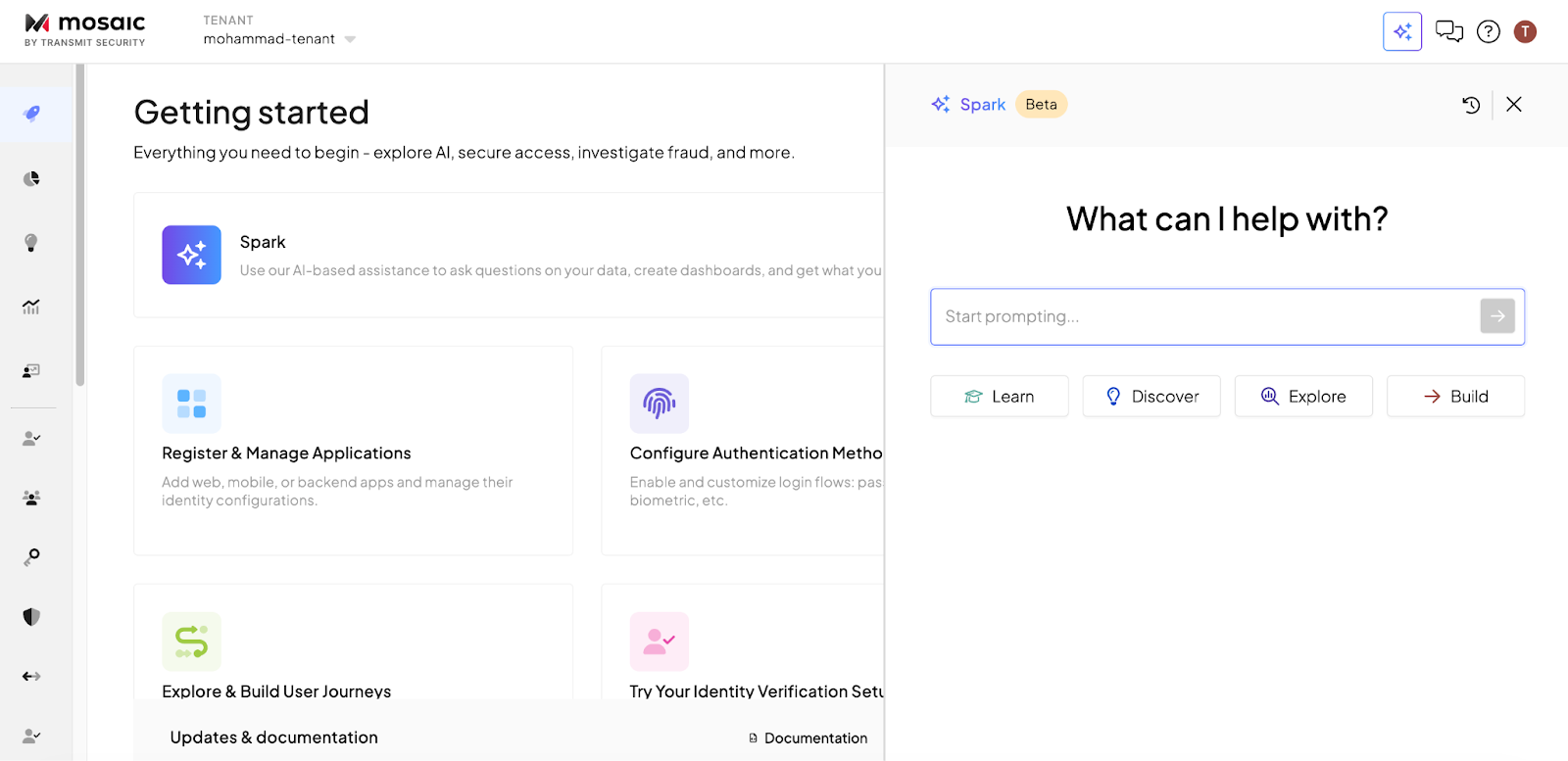
One of the most significant milestones of 2025 was the introduction of Spark, Mosaic’s AI assistant for building, analyzing and evolving identity and fraud experiences. Spark brings Generative AI into every stage of the identity lifecycle, helping teams move faster and make better decisions without relying on complex, manual workflows.
With Spark, teams can define objectives, generate identity and fraud journeys using natural language, analyze performance and continuously optimize flows based on real-world behavior. By combining AI guidance with live data and adaptive intelligence, Spark transforms identity security from a static configuration exercise into a system that learns and evolves over time.
FAPI 2.0 Certification: Strengthening Trust and Standards Alignment
In 2025, Mosaic became officially FAPI 2.0 certified, reinforcing its commitment to the highest standards of security, interoperability and regulatory readiness. As one of the first platforms to adopt the finalized FAPI 2.0 specification, Mosaic is now even better positioned to support highly regulated use cases such as Open Banking.
A New Integration Marketplace for 3rd Party Products and Tools
As identity ecosystems continue to expand, seamless integration has become critical. Last year, Mosaic introduced a new Marketplace through the Integration Hub, making it easier to connect Mosaic with third-party tools and services.
The marketplace brings together prebuilt integrations and support for custom connections, allowing teams to integrate communication platforms, data systems, analytics tools and security services into both user-facing identity flows and operational workflows, helping organizations coordinate identity processes across the broader systems they already rely on.
Multi-Session Detection: Advancing Fraud Intelligence Beyond the Single Event
Fraud rarely happens in isolation. In 2025, Mosaic expanded its fraud detection capabilities with Multi-Session Detection, enabling teams to analyze patterns across multiple verification sessions rather than evaluating each event on its own.
By examining biometric similarity, document patterns and behavioral signals over time, Mosaic can surface repeated selfie usage, synthetic identities and indicators associated with manipulated or AI-generated media that may be difficult to detect in a single session. This added layer of intelligence helps teams uncover more complex fraud patterns with greater accuracy.
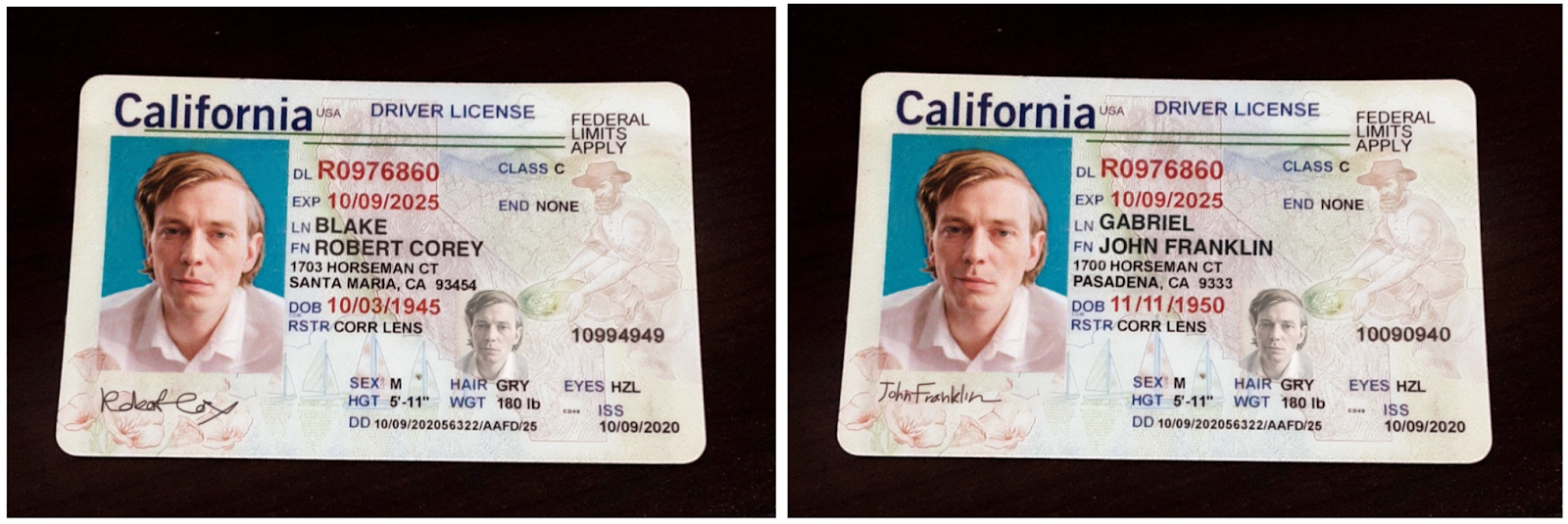
Synthetic IDs using the same face with different personal information.
Bringing Facial Biometrics Into Mosaic’s Authentication Options
Facial biometrics also became a core part of Mosaic’s authentication capabilities in 2025. Face Authentication allows organizations to authenticate users using facial recognition directly within orchestrated identity flows, as well as in login forms and the SSO Hosted Experience.
At the same time, Mosaic expanded visibility into a new class of automated activity known as Computer-Using Agents (CUAs). By introducing enhanced detection and visibility for CUA behavior, Mosaic helps teams distinguish human users from AI-driven automation and make more informed decisions as authentication threats continue to evolve.
Shaping What’s Next in Identity and Fraud Prevention
Together, these advancements reflect how Mosaic evolved in 2025 to address a rapidly changing identity and fraud landscape. From reimagining identity through AI to strengthening defenses against increasingly sophisticated fraud, Mosaic is enabling organizations to build identity security that evolves alongside users, threats and digital ecosystems.
Looking ahead to 2026, we’re committed to continuing this momentum and working closely with our customers to redefine how identity and fraud prevention are built and operated. Dive deeper into all the updates by exploring the full 2025 Mosaic Rewind Release Notes.